Reviewed by the TechnoTyre technical team, Karachi — based on years of inspecting and replacing tyres for local drivers.
Every tyre has a “birthday” — a manufacturing date stamped directly into the rubber. Knowing how to read it is one of the simplest ways to protect yourself from unsafe or unknowingly old stock, especially in a hot climate like Karachi, where heat speeds up rubber ageing.
This guide explains exactly how to find and read a tyre manufacturing date code, what the DOT marking means, and how old is too old for a tyre to stay on the road.
Why Tyre Manufacturing Date Matters for Safety
A tyre can look brand new — full tread, no visible damage — and still be unsafe. That’s because rubber degrades with age, not just with use. Over time, the compound hardens, loses flexibility, and becomes more prone to cracking and sudden failure, particularly under heat stress.
This matters more in Pakistan than in most countries. Karachi regularly sees summer temperatures above 40°C, and heat is one of the biggest accelerators of rubber degradation. A tyre that would still be considered safe in a cooler climate can already be a risk here.
Knowing your tyre’s actual manufacturing date — not just when you bought it — is the only reliable way to judge its true age.
Understanding the Tyre DOT Code and Date Format
Every tyre sold internationally carries a DOT (Department of Transportation) code on its sidewall. This code identifies the manufacturer, plant, and — most importantly for safety — the week and year of production.
Where to Find It
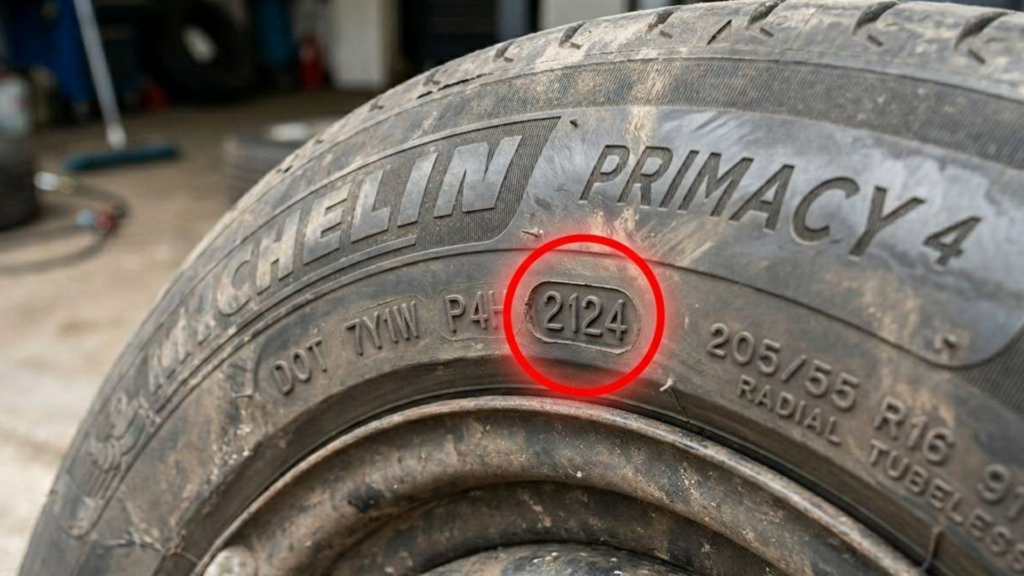
Look on either sidewall of the tyre for a sequence of characters starting with “DOT.” Manufacturers aren’t required to put the full code on both sides, so if you can’t find it on one side, check the other before assuming it’s missing.
How to Read the Date Code (Post-2000 Tyres)
Tyres made from the year 2000 onward use a 4-digit date code at the end of the DOT sequence, in the format WWYY:
- WW = production week (01–53)
- YY = last two digits of the manufacturing year
Example: A code ending in 1823 means the tyre was made in week 18 of 2023 — approximately late April 2023.
A Note on Older Tyres (Pre-2000)
Tyres manufactured before 2000 used a 3-digit code instead, which doesn’t specify the exact year clearly and is far more ambiguous to read. If you come across a tyre with only a 3-digit date code, treat it as very old regardless of appearance, and have it inspected by a professional rather than trying to calculate its exact age yourself.
Step-by-Step: How to Check Your Tyre’s Manufacturing Date
- Locate the DOT marking on the tyre sidewall.
- Find the last group of numbers in the DOT sequence — this is your date code.
- Split the digits into two pairs. The first two digits are the production week; the last two are the year.
- Convert the week number to an approximate month using a standard week calendar (e.g., week 35 falls in late August).
If you see 3515, the tyre was made in week 35 of 2015 — meaning it’s already over a decade old, and should not be in use.
How Old Is Too Old? Safe Tyre Age Guidelines
There’s a difference between how old a tyre is allowed to be when you buy it new, and how long you should keep using it — these are two separate checks, and mixing them up is where a lot of confusion comes from.
1. Checking Usage Life (Tyres Already on Your Vehicle)
Most tyre manufacturers recommend replacement guidelines based on age:
Tyre Age | Recommendation |
Under 5 years | Generally safe; inspect annually |
5–6 years | Safe in moderate climates; in hot climates like Karachi, start inspecting more closely for cracking or hardening |
6–8 years | Plan for replacement, especially if used daily in high heat |
10+ years | Replace immediately, regardless of tread depth or appearance |
Simple formula: Current Year − Manufacturing Year = Tyre Age
2. Checking Freshness at Time of Purchase (New Tyres)
This is a different question: when buying a “new” tyre, it may have sat in a warehouse for a while before reaching the shelf. As a buyer, look for tyres manufactured within the last 1–2 years, and be cautious of new tyres older than 3 years at the point of sale — not because they’re unsafe yet, but because you’re paying full price for a tyre that has already used up part of its usable life before it even touches the road.
Risks of Using Expired or Aged Tyres
As rubber ages past its safe window, several risks increase — regardless of how much tread remains:
- Reduced grip, especially in wet conditions
- Higher blowout risk from potholes or road debris
- Weakened sidewalls, increasing the chance of a flat
- Faster heat buildup, which speeds up further deterioration
- Poorer handling during sudden braking or emergency manoeuvres
In Karachi’s climate, these risks appear earlier than the general guidelines suggest, which is why closer inspection from the 5-year mark onward is worth doing.
Frequently Asked Questions
Q: Where exactly is the DOT code located? A: On the tyre sidewall — check both sides if you can’t find it on the first. It is never located on the wheel rim; it’s stamped into the tyre rubber itself.
Q: What’s the difference between the date code and the tyre serial number? A: The date code (the last 4 digits after DOT) tells you when the tyre was made. The full DOT code, including the plant and product codes before those digits, functions as more of a serial/identification number used for recalls and quality tracking. They appear together but serve different purposes.
Q: Is there an official “expiry date” on tyres? A: No tyre carries a printed expiry date. The 6-year (moderate climate) to 10-year (absolute maximum) guideline is an industry-recommended safety window, calculated from the manufacturing date, not a fixed legal expiry.
Q: Can I calculate tyre age myself? A: Yes — subtract the manufacturing year (from the date code) from the current year. No special tool is required, though several tyre manufacturer websites offer calculators if you prefer.
Q: What if I genuinely can’t find or read the date code? A: Check both sidewalls carefully first. If it’s still unreadable — due to wear, damage, or poor stamping — a tyre shop or the manufacturer can usually help identify it from other markings.
Practical Tips for Karachi Drivers
- Store spare tyres properly — cool, dry, out of direct sunlight — to slow ageing if you’re not using them immediately.
- Ask for recent stock when buying new tyres; a reputable seller will tell you the manufacturing date without hesitation.
- Write down your tyre’s date code when you buy it, so you can track its age over time without re-checking the sidewall every time.
- Inspect tyres annually past the 5-year mark for cracking, hardening, or sidewall damage — even if tread depth still looks fine.
Not sure which tyre suits your vehicle in the first place? Start by understanding the different types of tyres available, and keep them in good shape with proper tyre cleaning.
Final Thoughts
Reading a tyre’s manufacturing date takes less than a minute once you know the format — and it can tell you more about your safety than tread depth alone. In Karachi’s heat, a few extra minutes checking the DOT code before a long drive, or before buying a “new” tyre, is a small habit that meaningfully reduces risk.
At TechnoTyre, we’ve spent years inspecting and replacing tyres for Karachi drivers, and we share manufacturing dates transparently on everything we sell — because an informed customer makes a safer choice.